
Why smart people make bad decisions under pressure
A short, evidence-based breakdown of how decision quality degrades under stress - and how to recognise the early warning signs before decisions start repeating.
What this document is
This document accompanies the video Why smart people make bad decisions under pressure (see below).
It describes three well-established mechanisms through which acute and chronic stress degrade decision-making:

Attentional Narrowing
Tunnel vision: you focus on the one thing in front of you and miss what’s happening around it.

Premature Certainty
You decide too quickly just to “get it over with,” even though you don’t really have all the information.
Representational Collapse
You fall back on the same automatic responses because thinking things through feels impossible in the moment.
The focus is descriptive, not prescriptive.
This is not a framework for “better decisions”.
It is a tool for recognising when your decision system is no longer operating normally.

Why this matters
Most decision failures do not start with poor judgment or lack of intelligence.
They start with subtle, biological changes in how information is:
-
sampled,
-
evaluated,
-
and represented under load.
By the time outcomes degrade, these changes have often been present for weeks or months.
This document helps you spot them earlier.
What you’ll find inside
-
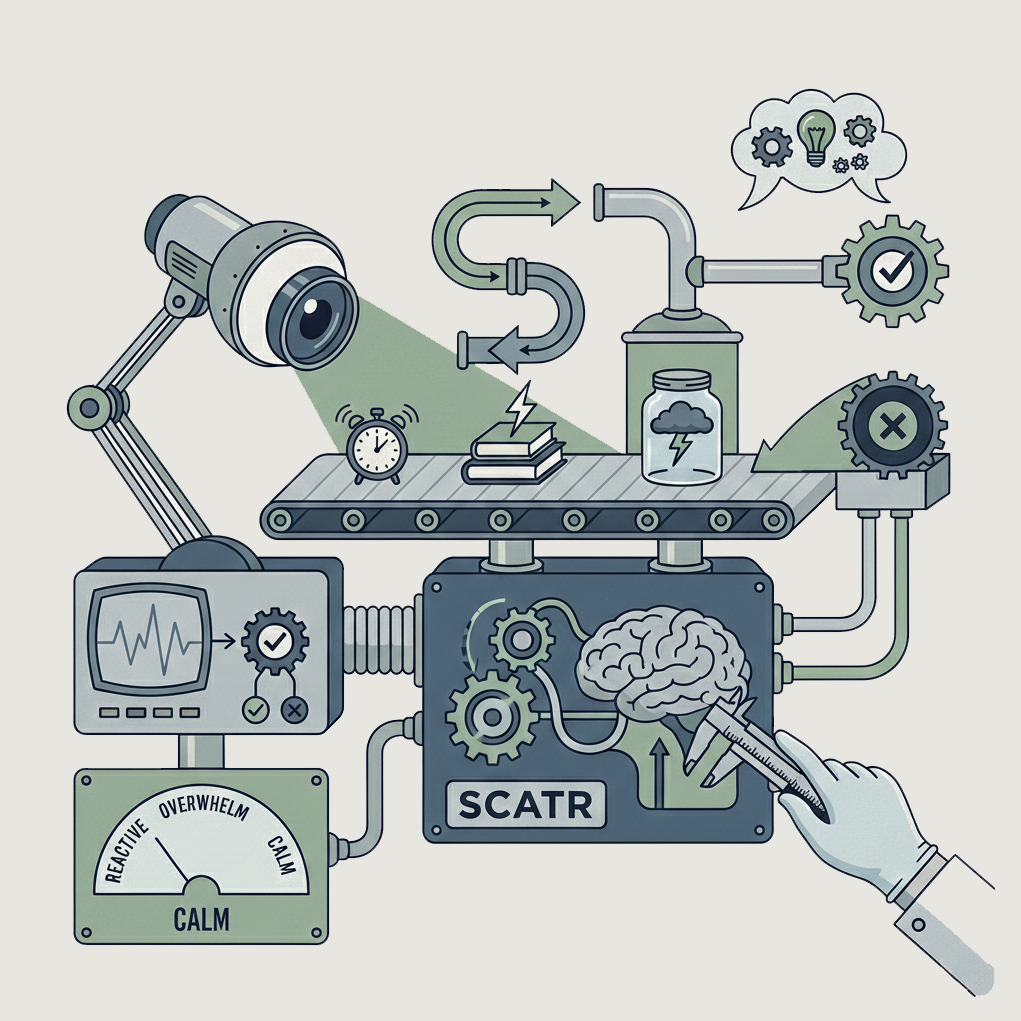
A clear explanation of three core decision-degradation mechanisms
-
Acute vs chronic stress effects for each
-
A symptom-based checklist using observable behaviour, not introspection
-
A simple cascade model showing how early failures compound over time
Who this is for
This material is intended for people who are:
-
accountable for the quality of their decisions
-
operating under sustained cognitive or organisational load
-
noticing subtle signs that their thinking feels less flexible than it used to
It is not designed as general self-help or stress education.

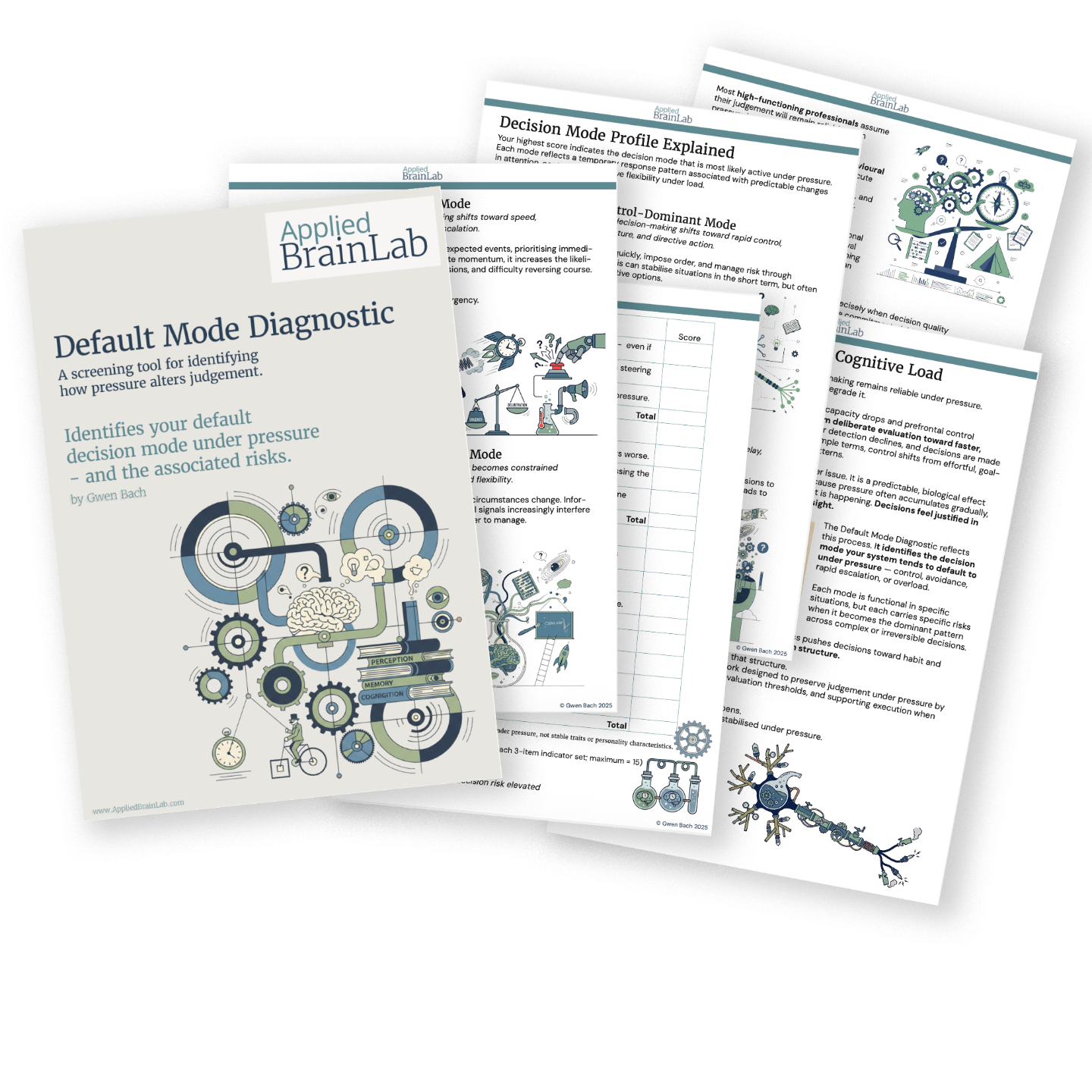
How does your brain decide under pressure?
The Default Mode Diagnostic assesses how your brain responds under stress - and where decision reliability begins to change.
Designed for professionals operating in complex, changing conditions.