
Start moving on something that matters to you.
You’re putting in the effort. But something you want to do keeps getting pushed back, feels too complicated to start, or never seems to get any closer.
Get Unstuck helps you take stock, choose a manageable starting point, and use the Goal Progress Map to work out what to do, what to learn, and how to keep track of your progress.
Four video lessons · Approximately 45 minutes of teaching · Printable tools included
Created and taught by Gwen Bach · MSc Applied Neuroscience · Former therapist
GET THE WORKSHOP -- $47
When “I’ll get on with it tomorrow” keeps becoming tomorrow.
You keep putting it off.
It matters to you. You’ve thought about it, perhaps researched it, and promised yourself you’ll make time. But when you sit down to start, it still feels like too much.
You’re working, but can’t see progress.
You’ve spent time learning, practising or figuring things out. The finished result is still some way off, so it feels as though all that effort hasn’t counted.
Your plan meets your actual day.
Something takes longer than expected. Someone needs you. You get distracted or discover a skill you don’t yet have. The plan looked reasonable until you tried to use it.
These are useful things to examine. They tell you what your next approach needs to account for.
Give yourself a way to work through it.
The Goal Progress Map brings the different parts of moving forward onto one page.
Start with something you want to change. Then look at what you have available, what could get in the way, and what would be manageable from where you are now.
Decide what you’re working towards.
Choose an outcome you can work on without taking on everything at once.
Make room for doing and learning.
Separate the actions you need to take from the skills you still need to develop. Learning how to do something belongs in the plan.
Prepare for the difficult moments.
Think through what will help you focus, what you want to remind yourself when discouraged, and what you’ll do if you get distracted.
See what happens. Then adjust.
Use the planning chart to track your work. Change the map as you learn more about the task and what is realistic.
You can cross things out. Change the timing. Make the next step smaller. This is a working document, and it’s allowed to look like one.
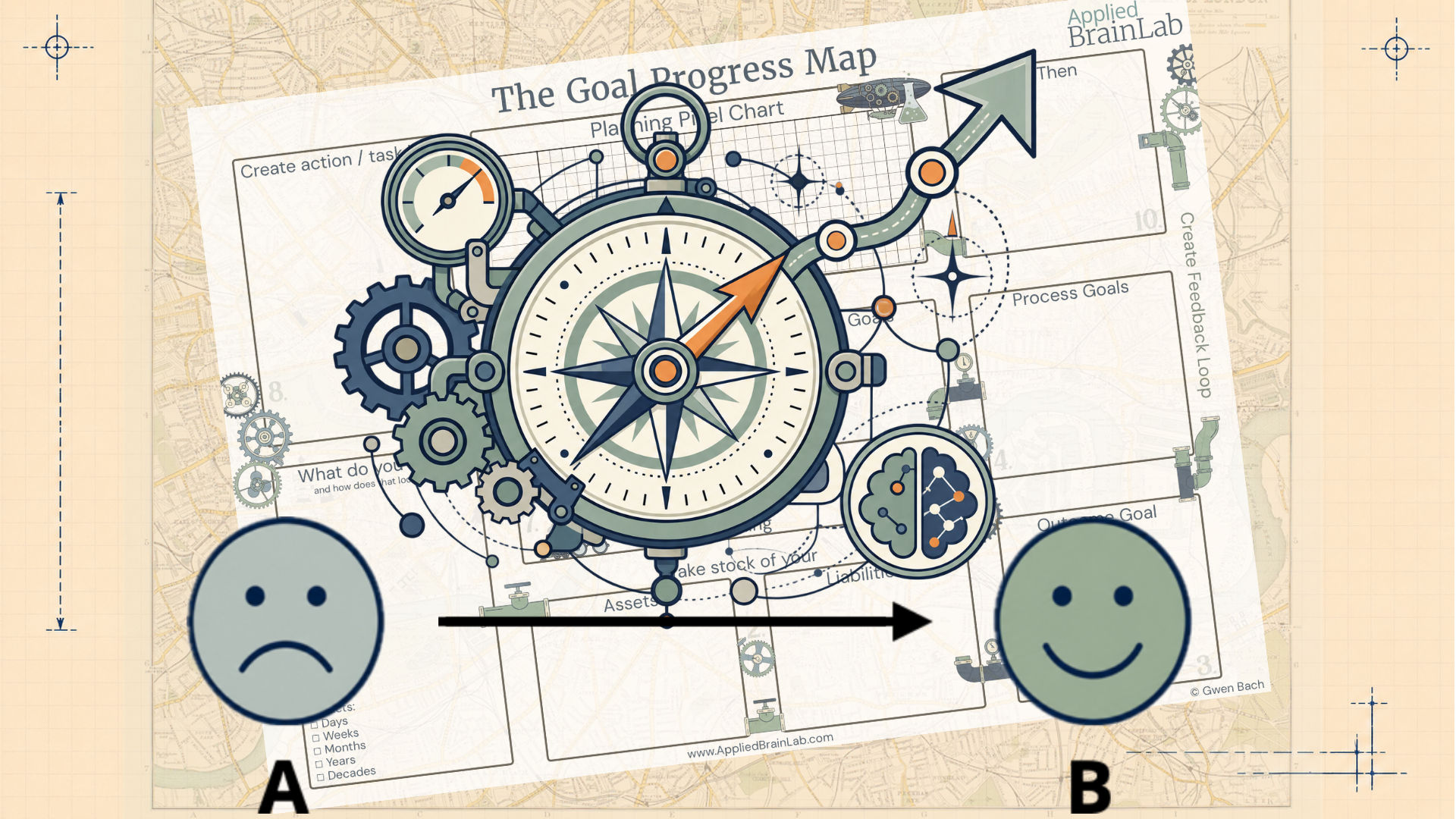
See how the same map works for two very different situations.
Inside the workshop, I walk you through two completed examples, explaining what goes into each part and why.
A project you want to finish
In the first example, I use the map to plan a workbook over four weeks. I break down the tasks, allow time to learn unfamiliar software, and work towards a print-ready file.
You’ll see how I make room for learning alongside the work itself.
A more focused day
In the second example, I use the map to organise a working day. I decide what to tackle, plan around the time available, and prepare for distractions that could pull me away.
You’ll see how I turn “be productive today” into actions I can follow.
From understanding where you are to deciding what you’ll do.
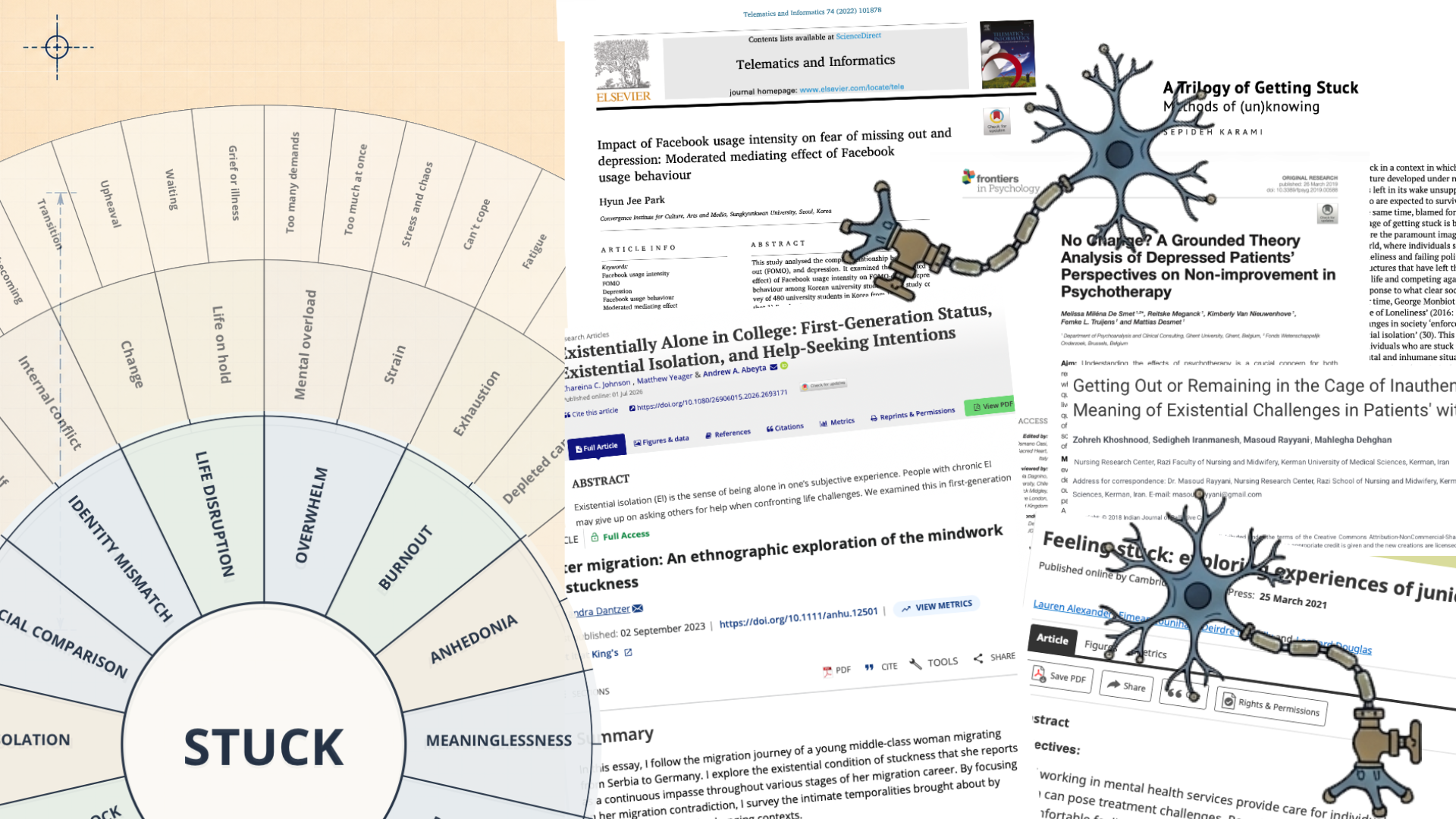
1. Recognise what feels familiar
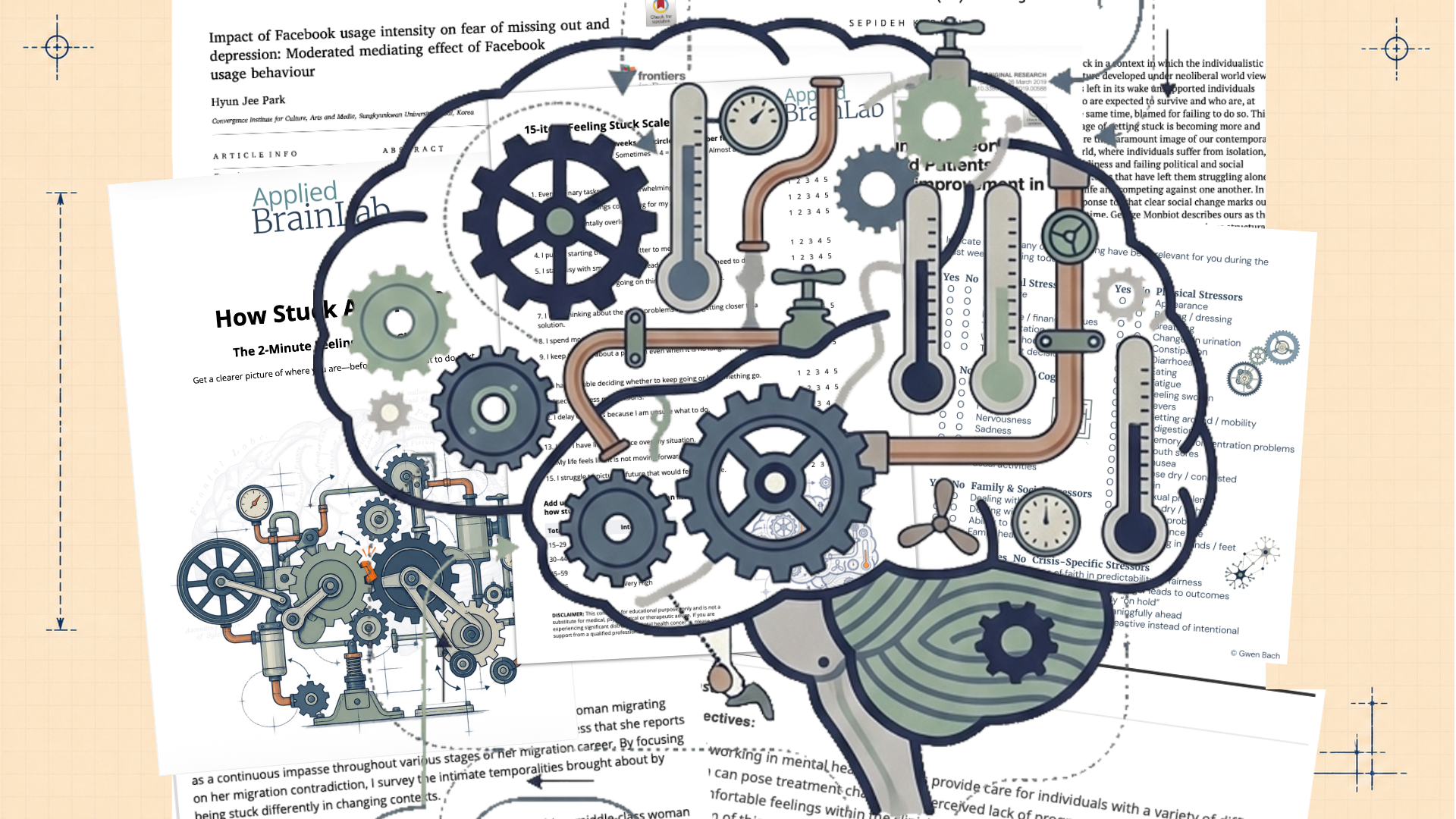
Use the Stuck Wheel to explore experiences such as overwhelm, uncertainty, social comparison and lack of progress. Mark the ones that match your current situation.
2. Take stock of your starting point
Complete the Feeling Stuck Check and stress checklist. Bring attention to what you’re experiencing and the demands you may have been overlooking.
3. Understand the thinking behind the approach
Explore research on goal-directed action, progress and well-being. I explain why I use small, manageable goals as a place to begin.
4. Put the Goal Progress Map to work
Follow the two worked examples, then apply the map to something of your own. Plan the actions, learning and support involved - and return to the map as you go.
The four videos take approximately 45 minutes to watch. Allow additional time to complete the exercises and use your map. You can work through the lessons in separate sittings.

Hi, I’m Gwen.
I’m an applied neuroscientist with a master’s degree in Applied Neuroscience, and a former therapist.
I developed an earlier version of this map for myself and later used it in my therapeutic work. I still use it for projects, difficult tasks and days when my attention seems to be going everywhere.
One lesson I’ve learned repeatedly: knowing a subject well doesn’t mean you automatically recognise what’s getting in your own way.
That’s why I value having something on paper. It gives me a way to examine what I’m trying to do, account for what’s involved, and make changes.
In this workshop, I explain the science behind the approach and show you how I use the tool. Research summaries and references are included in the coursebook if you’d like to go deeper.
Learn the method. Keep the tools. Use them again.
Get Unstuck includes:
-
Four video lessons: approximately 45 minutes of teaching, including two worked examples.
-
An 18-page downloadable coursebook: exercises, research summaries and references.
-
The Stuck Wheel: a starting point for reflecting on your experience.
-
The Feeling Stuck Check and stress checklist: tools for taking stock.
-
The printable Goal Progress Map: use a fresh copy for a new task, project or day.
Watch the lessons online. Download the coursebook and printable tools to keep for personal use.
Try the workshop with a 14-day money-back promise.
Watch the lessons and try the Goal Progress Map. If you decide the workshop isn’t for you, email me within 14 days of purchase and I’ll refund your payment.
You don’t need to submit your exercises or explain your personal circumstances.
Your statutory consumer rights remain unaffected.
Immediate access · No subscription
GET THE WORKSHOP -- $47Frequently Asked Questions
I already make plans and to-do lists. What does this add?
What if I feel too overwhelmed to take on another course?
What if my circumstances are genuinely outside my control?
Do I have to understand neuroscience?
I already have the free Feeling Stuck Check. What’s different here?
How long can I access the workshop?
What if I decide it isn’t for me?
Is this therapy or a diagnostic assessment?
Choose one thing you’d like to move forward.
It might be a task you keep avoiding, a project that needs breaking down, or a day you want to approach with more focus.
Start with something manageable. Learn how to map what’s involved, take action, and recognise the progress you make along the way.
Four video lessons · Downloadable coursebook and tools
One-time payment · Immediate access · 14-day money-back promise